
Introduction
Farming is one of humanity’s oldest activities, built around planting seeds, raising animals, cultivating land, and harvesting food, yet agriculture has always been closely connected to technological innovation.
Long before the arrival of smartphones and artificial intelligence, farmers were already developing technologies to make their work easier and more productive. What was once largely dependent on human and animal labour is increasingly becoming a data-driven, automated and connected industry. While goal has remained largely the same throughout history: produce more food, use resources more efficiently and make farming more productive, what has changed is the technology available to achieve it.
History of Technology in Agriculture: From Simple Implements to Smart Farms
The relationship between farming and technology did not begin with computers. It began with simple tools. For thousands of years, agricultural technology evolved gradually, with each major innovation allowing farmers to cultivate more land, reduce labour or increase production.
From Hand Tools to the Plough: At around 10,000 BCE, humans began transitioning from hunter-gatherer societies to settled agricultural communities. This created a need for tools that could make farming more efficient. Early farmers relied on simple implements such as digging sticks, stone axes and hoes. These tools allowed them to clear land, prepare soil, plant seeds and harvest crops more effectively.
One of the most important early agricultural inventions was the plough. Early ploughs were relatively simple, but they represented a major improvement over digging and cultivating soil by hand. Over time, plough designs became increasingly sophisticated.
Medieval Agricultural Technology: Agricultural technology continued to develop during the Middle Ages. One important development was the heavy plough, which featured a mouldboard capable of turning over soil and burying weeds and crop residue. This was particularly useful in the heavy soils of Northern Europe. Technology was not limited to physical machinery. Farming techniques themselves also evolved. The three-field system, for example, divided farmland between winter crops, spring crops and fallow land. This allowed soil to recover while maintaining agricultural production. Farmers also developed increasingly sophisticated irrigation systems. Technologies such as qanats in the Middle East and terraced farming in parts of Asia allowed agriculture to expand into environments where farming would otherwise have been extremely difficult.
The Seed Drill and the Beginning of Mechanisation: The early 18th century brought another important development with British agriculturist Jethro Tull’s mechanical seed drill. Instead of scattering seeds manually, the machine placed them at more consistent depths and intervals. This reduced seed waste and improved planting efficiency. It was an early example of something that would become a defining feature of agricultural technology: using machinery to perform repetitive tasks more accurately than manual labour alone.
The Industrial Revolution Changes Farming: In this era, steam-powered machinery began replacing some of the work previously performed by humans and animals. Steam-powered threshers, for example, could separate grain from stalks and husks much faster than traditional methods. In 1831, Cyrus McCormick’s mechanical reaper further transformed harvesting. The horse-drawn machine could harvest significantly more grain than workers using traditional scythes. Then came innovations such as John Deere’s steel plough, developed in the 19th century. Its design made it particularly effective at turning the sticky prairie soils of the American Midwest, opening large areas of land to cultivation.
From Mechanical Equipment to Modern Farm Machinery: The 20th century accelerated this transformation. Tractors gradually replaced horses and other draft animals for many agricultural tasks. Mechanical planters, harvesters, threshers and other specialised equipment allowed farmers to work much larger areas with fewer workers. At the same time, scientific developments introduced new approaches to soil management, fertilisation and pest control.
The Arrival of Electricity, Computers and the Internet: The next major transformation came with electricity and eventually computers. Electrical equipment made it possible to automate and improve processes such as irrigation, pumping, refrigeration and storage. Computers then introduced something completely different: the ability to collect, store and analyse agricultural information. Farmers could begin using software to manage operations, track crops, monitor finances and analyse production. This is what is now known as smart farming.
Agriculture Enters the Age of Automation: Today, GPS-guided tractors can navigate fields with high levels of precision. Sensors can monitor soil moisture, temperature and nutrient conditions. Drones can survey large areas of farmland from the air. Robots can assist with planting, weeding and harvesting. Artificial intelligence can analyse large quantities of agricultural data and identify patterns that would be difficult for humans to detect manually.
The Current State of the Agricultural Sector
Agriculture remains one of the most important sectors in the world. It provides food, supports livelihoods and contributes significantly to national economies. Yet modern agriculture faces challenges that previous generations of farmers did not have to deal with on the same scale.
The global population continues to grow, increasing demand for food. At the same time, farmers are dealing with climate change, water scarcity, labour shortages, rising input costs, soil degradation and pressure to reduce environmental damage.
This asks a difficult question: How do we produce more food while using fewer resources and protecting the environment?
Technology is increasingly being presented as part of the answer. The agricultural technology market is expanding as farmers and agricultural businesses adopt tools designed to improve productivity and efficiency. Technologies such as precision agriculture, IoT, drones, robotics, AI, vertical farming and controlled-environment agriculture are changing how food can be produced.
Precision Agriculture: Instead of treating an entire farm as though every section has identical needs, precision agriculture allows farmers to respond to differences within a field. GPS, Geographic Information Systems, sensors and variable-rate technology can help farmers determine where particular crops need more water, fertiliser or other inputs. This can reduce waste while potentially improving yields.
The Connected Farm: The Internet of Things has also entered agriculture. Sensors can be placed in soil, greenhouses, water systems, machinery and livestock environments. They can collect information about moisture, temperature, humidity, nutrient levels and animal behaviour. That information can then be transmitted to software platforms where farmers can monitor their farms remotely.
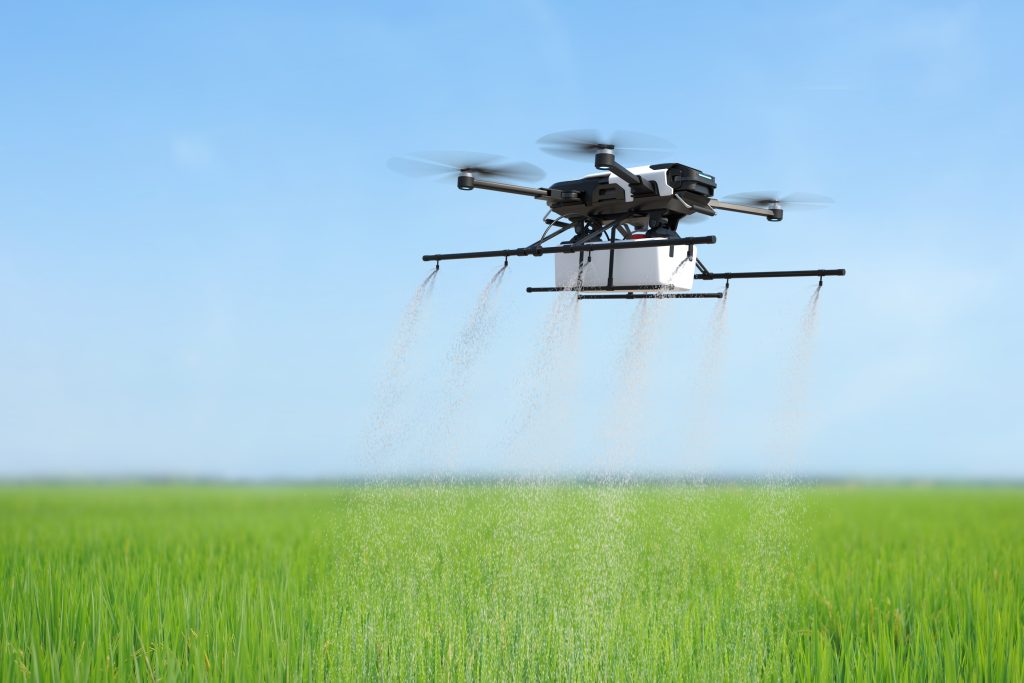
Drones Take Farming to the Sky: Drones provide farmers with another perspective. Equipped with cameras and, in some cases, multispectral imaging technology, agricultural drones can survey large areas quickly. They can help identify crop stress, pest infestations, irrigation problems and other issues before they become more serious. Some agricultural drones can also be used to apply treatments, further expanding their role beyond simple observation.
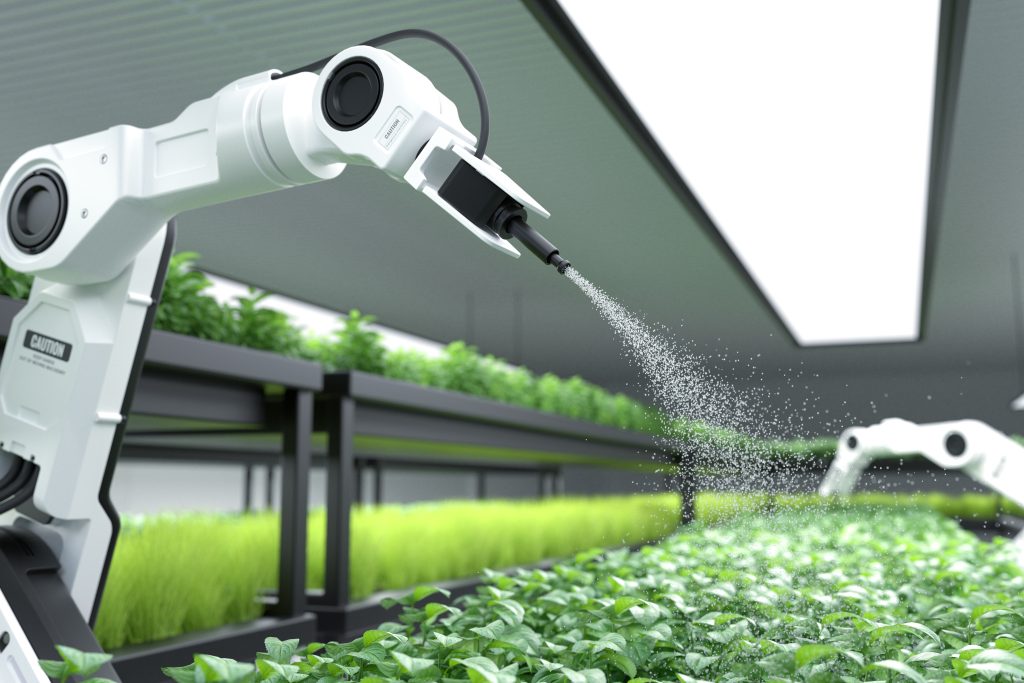
Robotics and Automation: Robotics is another major development. Agricultural robots can perform repetitive and labour-intensive tasks such as weeding, seeding, spraying, harvesting and transporting produce. Autonomous machinery can also operate with limited human intervention. For farms facing labour shortages, automation can potentially reduce dependence on manual labour while improving consistency and efficiency.
Artificial Intelligence and Data: Perhaps the biggest change is the increasing use of AI and data analytics. Modern farms can generate enormous amounts of information through sensors, drones, machinery and software. AI and machine learning systems can analyse this information to identify crop health issues, predict yields, detect diseases, analyse soil conditions and support decisions about planting and harvesting.
The Impact of Technology on Agriculture
Technology has brought significant benefits to agriculture, but its impact is not entirely positive. Like almost every technological transformation, it creates opportunities while introducing new challenges.
The Positive Impact
- Higher Productivity
Technology allows farmers to accomplish more with less.
Modern machinery can cultivate and harvest large areas of land far faster than manual labour. Precision agriculture can ensure resources are directed towards areas that need them, while vertical farming can produce crops in environments where traditional farming would be difficult.
- More Efficient Use of Resources
One of the biggest advantages of agricultural technology is resource optimisation.
Sensors can determine how much moisture exists in soil. Smart irrigation systems can deliver water according to actual crop requirements. Variable-rate technology can apply fertiliser or pesticides only where they are needed.
This reduces unnecessary consumption of water, fertiliser and chemicals.
- Better Decision-Making
Farmers have traditionally relied heavily on experience, observation and knowledge of local conditions.
Technology does not eliminate that knowledge, but it can supplement it.
Weather data, satellite imagery, soil sensors and farm management software provide farmers with information that can support better decisions.
- Early Detection of Problems
A crop problem can become significantly more expensive if it is discovered too late.
Drones, sensors and AI systems can help identify signs of pests, disease, drought or nutrient deficiencies earlier.
Early detection gives farmers an opportunity to intervene before a problem spreads.
- Improved Worker Safety
Agriculture can involve physically demanding and sometimes dangerous tasks.
Automation can reduce the amount of time workers spend performing certain hazardous or repetitive activities. Robots and remotely operated equipment can potentially handle tasks that would otherwise expose workers to difficult conditions.
- Reduced Waste
Technology can help reduce waste throughout the agricultural process.
Better irrigation can reduce water waste. Precision application can reduce unnecessary chemical use. Smart storage and refrigeration can help preserve harvested produce.
Technologies such as blockchain can also improve traceability across agricultural supply chains.
The Negative Impact and Challenges
Despite these advantages, agricultural technology comes with its own problems.
- High Costs
Advanced agricultural equipment can be expensive.
Drones, autonomous machinery, sensors, robotics and specialised software may require significant investment. For smallholder farmers, particularly those operating with limited capital, the initial cost can be a major barrier.
- Maintenance and Technical Skills
Modern equipment requires maintenance.
A traditional farming tool can often be repaired with relatively simple mechanical knowledge. A GPS-guided tractor or IoT system may require specialised technical expertise.
This creates another challenge: farmers need access not only to technology but also to the skills required to operate and maintain it.
- Data Security and Privacy
Connected farms generate enormous amounts of data.
Information about crop production, land, machinery, finances and operations can be valuable. If these systems are poorly secured, sensitive agricultural data could be exposed or compromised.
As farms become more connected, cybersecurity becomes increasingly important.
- Environmental Concerns
Technology can reduce environmental impact, but it can also contribute to it.
Heavy machinery can contribute to soil compaction and environmental pollution. Some agricultural technologies may encourage intensive production or excessive use of chemicals if they are poorly implemented.
Technology itself is not automatically sustainable. How it is designed and used matters.
- Dependence on Infrastructure
Many modern agricultural technologies depend on electricity, internet connectivity, satellites or cloud services.
For farmers operating in rural areas with unreliable electricity or poor internet access, these dependencies can limit the usefulness of otherwise advanced systems.
- Disruption of Traditional Agricultural Jobs
Automation can reduce the need for certain forms of manual labour.
While new technologies create new roles in areas such as agricultural engineering, data analysis, robotics and equipment maintenance, workers whose jobs are automated may need to acquire new skills.

The Future of Technology in Agriculture
The agricultural technology revolution is far from finished. Artificial intelligence, robotics, IoT, biotechnology, drones and autonomous machinery are still developing. Future farms could become increasingly automated, with machines communicating with one another and making decisions based on real-time data.
A sensor could detect that soil is becoming too dry. An irrigation system could respond automatically. A drone could inspect the affected area. AI could analyse the data and determine whether the problem is drought, disease or nutrient deficiency. A robotic system could then carry out the appropriate intervention.
The farmer would still play an important role, but their role could increasingly shift from performing every physical task to managing, interpreting and supervising intelligent systems.
Vertical farming and controlled-environment agriculture could also expand food production in urban areas, while regenerative agriculture and smart resource management could help reduce the environmental footprint of farming. The ultimate goal should not simply be to make agriculture more technological. It should be to make it more productive, resilient, sustainable and accessible.
Conclusion
Agriculture has always evolved through technology, from the earliest ploughs and steam engines to modern tractors. Today, that transformation is accelerating as autonomous machinery, aerial drones, soil sensors, AI data analysis, and robotics reshape the field. Technology is not replacing farming, it is giving farmers powerful new tools to meet the timeless goal of feeding a growing global population.
The farm of the future may look very different from the farm of today, but the fundamental objective will remain the same: producing enough food to support an ever-growing population.