
Introduction
Smart televisions, smart fridges, smart vehicles. You probably already have some of these smart appliances around you. Perhaps your smartwatch tracks your heart rate, your phone connects automatically to your car, or your home security camera sends an alert directly to your phone when it detects movement. These devices may seem unrelated, but they are all part of a much larger technological concept called the Internet of Things, or IoT. The idea behind IoT is simple: everyday physical objects can be equipped with sensors, software, processors, and network connectivity, allowing them to collect information, communicate with other devices, and sometimes make decisions or perform actions automatically.
IoT is gradually changing the way people interact with technology. Instead of the internet being something we primarily access through computers and smartphones, IoT extends that connectivity into our homes, vehicles, factories, farms, hospitals, cities, and almost every other environment. But what exactly makes an ordinary object an IoT device, and why is this technology becoming increasingly popular?
What Is IoT?
The Internet of Things (IoT) refers to a network of physical objects embedded with sensors, software, processing capabilities, and communication technologies that allow them to connect to networks and exchange data. These objects, sometimes called smart objects, can include household appliances, vehicles, wearable devices, industrial machines, medical equipment, agricultural systems, and much more. An IoT device can collect information from its environment, transmit that information to another system, receive instructions, and perform an action.
In some cases, this entire process can happen automatically without direct human involvement. For example, imagine a smart irrigation system on a farm. Sensors placed in the soil can measure moisture levels. When the system detects that the soil has become too dry, the information can be transmitted to a processing system. If the moisture level falls below a predefined threshold, the system can automatically activate an irrigation pump. The farmer does not necessarily have to switch the pump on manually. The devices communicate, process information, and respond accordingly.

What Tech Makes IoT Possible?
IoT is not a single technology. It is an ecosystem made up of several technologies working together. Sensors and actuators are at the heart of many IoT systems. Sensors collect information from the physical environment, including temperature, light, movement, pressure, humidity, distance, images, and gases. Actuators perform physical actions based on instructions from the system. They can switch equipment on or off, operate motors, open valves, or adjust mechanical components.
There are many types of sensors, temperature sensors measure heat, gyroscopes detect orientation and angular movement, infrared sensors can detect heat or motion, ultrasonic sensors can measure distance, and light-dependent resistors can measure light intensity. Gas sensors can also detect substances such as smoke or certain gases. Embedded processing units provide the intelligence needed to process information locally. Microcontrollers and microprocessors can interpret sensor readings, execute programmed instructions, and control the operation of devices.
Connectivity technologies allow devices to communicate. Depending on the application, IoT devices can use Wi-Fi, Bluetooth, cellular networks, Zigbee, or low-power technologies such as LPWAN and LoRaWAN. IoT gateways can act as intermediaries between groups of devices and larger networks. They can collect information from multiple devices, translate communication protocols, perform some processing, and securely transmit data to cloud or edge systems.
Cloud and edge computing provide the processing and storage capabilities required by larger IoT systems. Cloud platforms can store and analyze enormous amounts of information collected from connected devices. Edge computing instead processes data closer to where it is generated, which can reduce latency and allow systems to respond more quickly.
Finally, applications and user interfaces allow people to interact with IoT systems. A smartphone application, web interface, or dashboard can display information, provide alerts, and allow users to control connected devices. Together, these components create the IoT ecosystem: devices collect data, networks transmit it, processing systems analyze it, applications present useful information, and actuators can respond by carrying out physical actions.
How Does an IoT System Work?
IoT systems generally operate through a continuous cycle. First, sensors collect information from the environment. The information is then transmitted through a network to an embedded processor, gateway, edge device, or cloud platform. The data is processed and analyzed. The system may compare the information against predefined conditions or use analytics to identify patterns. If a particular condition is detected, a trigger can be generated. An actuator or another connected device can then respond. For example, a smart home thermostat can detect the temperature of a room, send the reading to its processing system, compare it with the desired temperature, and activate heating or cooling equipment when necessary.
IoT architecture is commonly described through several layers. The perception or sensing layer interacts with the physical world and collects data. The transport or network layer moves that information between devices and processing systems. The processing or middleware layer stores, filters, analyzes, and manages the data and connected devices. Finally, the application layer delivers services to users, such as smart-home controls, healthcare monitoring, industrial automation, or smart-city applications.
Why Is IoT Important and Gaining Popularity?
The growing popularity of IoT can be attributed to its ability to make technology more responsive, automated, and useful. One major advantage is automation. IoT can reduce the need for people to manually perform repetitive tasks. Connected systems can monitor conditions and respond automatically, improving productivity and efficiency.
IoT also enables real-time monitoring. Businesses can continuously monitor machinery, energy consumption, inventory, environmental conditions, or other important variables. Problems can potentially be identified before they become major failures. Another reason for its popularity is better decision-making. IoT devices generate enormous amounts of data. When that data is properly analyzed, businesses and organizations can identify patterns, understand operations, predict problems, and make more informed decisions.
IoT can also reduce costs. Predictive maintenance, for example, allows organizations to monitor equipment and identify signs of potential failure before a breakdown occurs. This can reduce downtime and unnecessary maintenance expenses.
For consumers, IoT offers convenience. A person can control lights, appliances, cameras, thermostats, or other devices remotely through a smartphone. Connected wearables can monitor physical activity and provide information directly to the user. The technology is also becoming more accessible as connected hardware and networking technologies continue to develop. At the same time, cloud computing and data analytics provide the infrastructure needed to handle the enormous amounts of information generated by IoT devices.
However, the growth of IoT also creates challenges. More connected devices mean a larger potential attack surface for cybercriminals. Weak device security can expose systems to hacking, while always-on sensors can raise privacy concerns. Different manufacturers may also use incompatible standards, making interoperability difficult. Maintaining thousands or millions of connected devices, including updating software and replacing batteries, can also become complicated. These challenges mean that IoT growth must be accompanied by strong cybersecurity, privacy protections, effective device management, and reliable infrastructure.
Various Applications of IoT
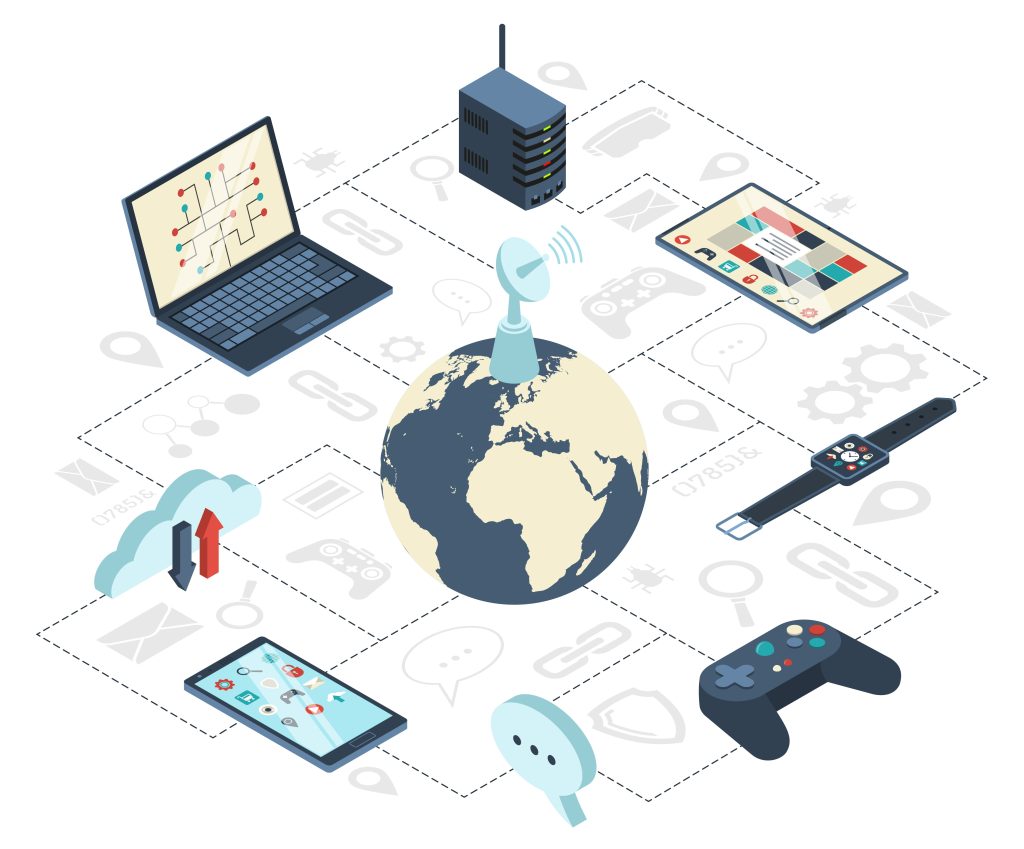
The potential applications of IoT are enormous because almost any physical object capable of sensing, processing, communicating, or responding can potentially become part of an IoT system.
Smart Homes: Smart homes are one of the most familiar examples of IoT. Smart televisions, thermostats, security cameras, lighting systems, door locks, and appliances can connect to networks and communicate with one another. A homeowner can remotely monitor a security camera, switch off a light, or adjust the temperature using a smartphone. Automated systems can also reduce energy consumption by switching devices on or off according to usage patterns.
Healthcare and Wearables: IoT is transforming healthcare through connected medical devices and wearable technology. Smartwatches and other wearable devices can monitor information such as heart rate and activity levels. Hospitals can also use connected devices to monitor patients remotely, track medical equipment, manage inventory, and collect real-time information. This can help healthcare professionals respond more quickly to changes and improve patient monitoring.
Agriculture: Farmers can use IoT sensors to monitor soil moisture, temperature, weather conditions, crop growth, and livestock. A smart irrigation system, for example, can determine when crops require water instead of relying entirely on manual observation. This can improve agricultural productivity while reducing unnecessary water consumption.
Industrial IoT: Manufacturing is another major area where IoT is being adopted. Industrial IoT, commonly called IIoT, connects machinery, sensors, production systems, and other industrial equipment. Factories can monitor machine performance, identify unusual behavior, predict equipment failures, track inventory, and automate production processes. This can improve efficiency while reducing downtime.
Transportation and Logistics: Connected vehicles and logistics systems can monitor vehicle locations, fuel usage, cargo conditions, and delivery routes. Companies can track shipments in real time and optimize transportation routes. Smart vehicles can also communicate with other systems to improve safety, navigation, and efficiency.
Smart Cities: IoT can extend beyond individual buildings to entire cities. Smart-city systems can use connected sensors to monitor traffic, waste collection, street lighting, environmental conditions, and other urban services. For example, smart streetlights can adjust their operation based on conditions, while traffic-monitoring systems can collect information that helps authorities manage congestion.

Conclusion
The Internet of Things represents a major expansion of what the internet can connect. It moves connectivity beyond computers and smartphones and into the physical world, allowing appliances, vehicles, machines, medical devices, agricultural equipment, and countless other objects to collect information and communicate. Its growing popularity comes from its ability to automate tasks, provide real-time information, optimize resources, reduce costs, and make everyday activities more convenient. From a smartwatch on someone’s wrist to sensors monitoring a factory thousands of kilometers away, IoT is already becoming part of everyday life.
As connectivity continues to develop, IoT systems are likely to become even more capable. The future may bring more intelligent homes, more efficient factories, smarter cities, and increasingly automated industries. However, the success of IoT will depend not only on connecting more devices, but on connecting them securely, responsibly, and intelligently. The more connected our world becomes, the more important it will be to protect the data and systems that keep it running. The Internet of Things is ultimately about more than making objects “smart.” It is about creating a world where physical objects can sense, communicate, learn from information, and respond, and that is why IoT is becoming one of the most important technologies shaping the connected world.