

Video games are a form of entertainment, a way to relax, compete, and escape into fictional worlds. Yet, behind every character, environment, and interactive experience lies a complex network of technologies working together. Gaming has become a testing ground for innovations in software engineering, artificial intelligence, computer graphics, physics simulation, networking, and hardware design. Technologies developed for games have also found applications in industries such as film, architecture, education, and scientific simulation.
From the realistic character movements to the immersive virtual worlds of modern games, gaming demonstrates how technology can transform imagination into interactive reality.
HISTORY OF GAMING TECHNOLOGY
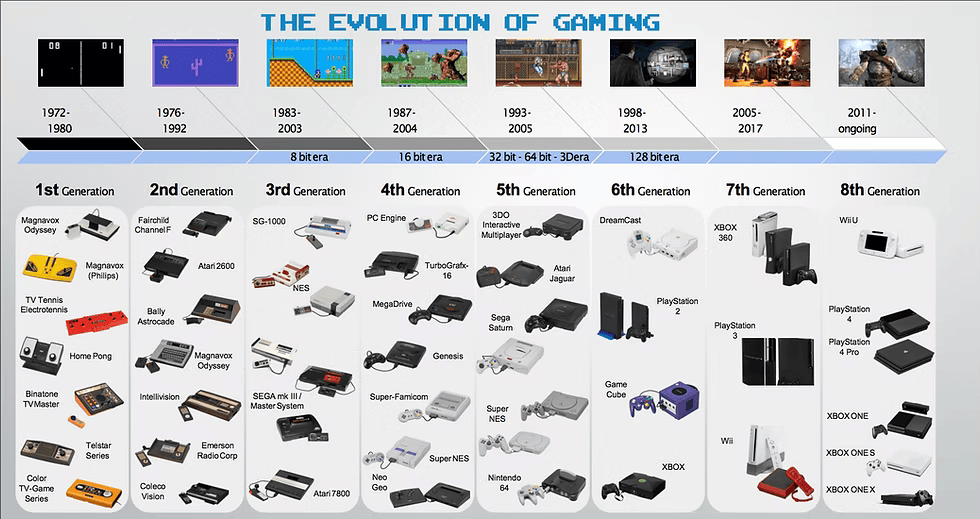
The history of video games is closely tied to the advancement of computing. Early games such as Pong demonstrated that computers could provide interactive entertainment, while Space Invaders and Pac-Man helped popularise arcade gaming. The arrival of home consoles brought gaming into people’s living rooms. Systems such as the Nintendo Entertainment System and Sega Genesis expanded what developers could create within limited hardware capabilities. Programmers had to work creatively around restrictions in memory, processing power, and graphics. The transition to 3D gaming marked another major turning point. Titles such as Super Mario 64 and Tomb Raider introduced players to expansive three-dimensional environments, requiring new approaches to camera control, rendering, character movement, and world design. Later, games such as Half-Life 2 showcased advanced physics interactions, while Crysis became famous for its demanding graphics and detailed environments. These developments helped push the capabilities of gaming hardware and software, continually raising expectations for realism and interactivity.
CURRENT TECHNOLOGIES IN GAMING
- Game Engines
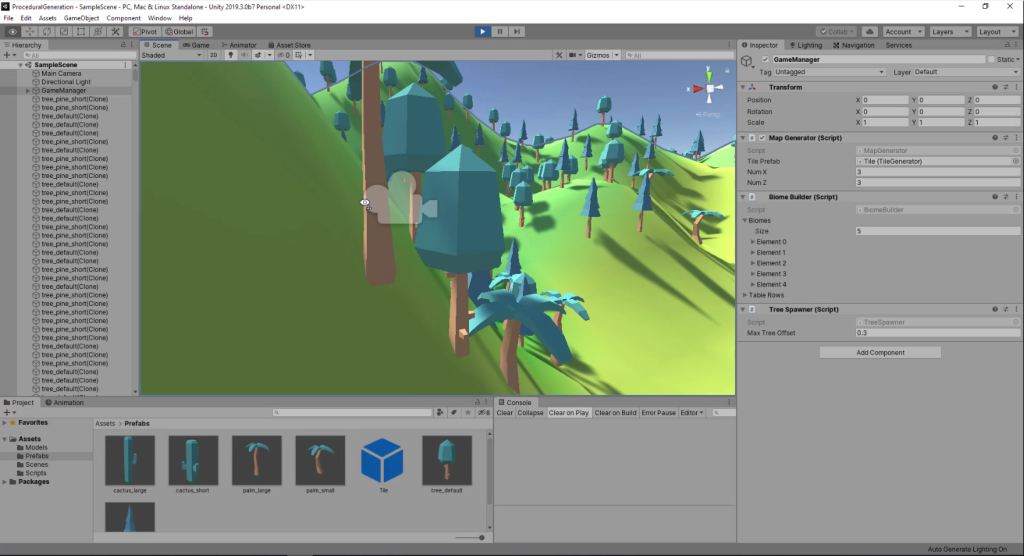
Game engines provide the underlying tools used to develop games, including graphics rendering, physics, animation, audio, and input systems. Engines such as Unreal Engine and Unity allow developers to build everything from small independent games to large-scale productions. Technologies such as Unreal Engine’s Nanite and Lumen help developers create detailed environments and advanced lighting effects. These tools demonstrate how improvements in software can make previously demanding visual techniques more accessible.
- Euphoria and Procedural Animation
One fascinating example is Euphoria, NaturalMotion’s character-animation technology used in games including Grand Theft Auto IV and Red Dead Redemption. Rather than relying entirely on fixed animations, Euphoria synthesises character reactions using physical simulation, allowing characters to respond dynamically to impacts and their surroundings. This technology helped make virtual characters feel less like scripted models and more like physical bodies reacting to the world. It illustrates the relationship between animation, physics, and software engineering in creating convincing digital experiences.
- Artificial Intelligence
AI has long been used to control enemies, allies, pedestrians, and other non-player characters (NPCs). Modern techniques can support more complex decision-making, navigation, and behavioural systems. Games such as The Last of Us use coordinated enemy behaviour to create more challenging encounters, while open-world games use AI systems to populate environments with characters that react to the player’s actions. As development continues, AI may support more dynamic conversations, adaptive difficulty, and characters capable of responding to a wider range of player choices. The challenge is making these systems reliable, believable, and enjoyable rather than simply more complicated.
- Graphics, Physics, and Hardware
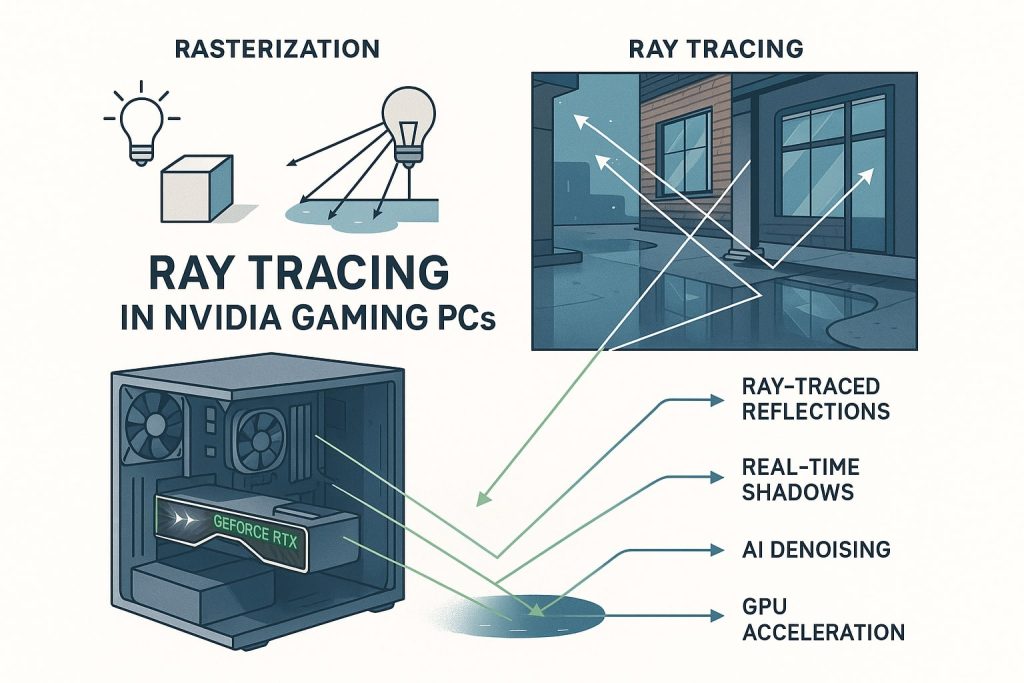
Ray tracing simulates how light interacts with surfaces to produce more realistic reflections, shadows, and illumination. Meanwhile, physics engines calculate how objects move, collide, and respond to forces. Games also benefit from specialised graphics processing units (GPUs), high-speed storage, advanced processors, and technologies such as NVIDIA DLSS and AMD FSR, which use upscaling techniques to improve performance and image quality.
Together, these technologies help developers create larger, more detailed worlds without requiring every visual effect to be rendered at full resolution at all times.
CURRENT TRENDS IN GAMING
Gaming technology continues to evolve beyond traditional game development. Several current trends are changing how games are created, experienced, and preserved.
- Vibe-Coded Games
AI-assisted development, often called vibe coding, allows people to describe what they want to build in natural language and use AI tools to generate code. This makes it easier for beginners and independent creators to experiment with game ideas, prototypes, and simple interactive experiences.
However, AI-generated code still requires testing, debugging, and security checks. A playable prototype is not necessarily a polished, reliable game. Software development knowledge remains important for turning quick experiments into quality products.
- Emulation and Game Preservation
Emulation allows software designed for one system to run on another by reproducing the original hardware’s behaviour. It has helped players revisit older games on modern computers and handheld devices, while also supporting research into how classic games were built.
As emulation improves, it can help preserve gaming history and make older titles more accessible. However, compatibility, performance, copyright, and the lawful acquisition of game files remain important considerations.
- Modding and User-Created Content
Modding involves modifying or adding to an existing game. Communities have created new missions, characters, maps, gameplay systems, and even entirely new experiences using existing games as a foundation.
Games such as Minecraft, Skyrim, and Grand Theft Auto V demonstrate how user-created content can extend a game’s lifespan and inspire creativity. Modding can also introduce enthusiasts to scripting, 3D modelling, software testing, and other technical skills.
- Jailbreaking and Hardware Freedom
Jailbreaking or modifying a console can remove certain manufacturer-imposed restrictions, allowing users to experiment with custom software and additional functionality. Depending on the device, this may enable homebrew applications, customisation, or further experimentation with emulation.
These activities can provide valuable insight into hardware and software systems, but they also carry risks, including security vulnerabilities, damaged devices, online-service bans, and legal or warranty complications. They should be approached with an understanding of those risks.
- Cloud Gaming and Virtual Reality
Cloud gaming streams games from remote servers, reducing the need for powerful local hardware when a reliable internet connection is available. Virtual reality (VR) and augmented reality (AR), meanwhile, introduce new ways to interact with digital environments.
These technologies point towards gaming experiences that are increasingly connected, immersive, and accessible across different devices.

FUTURE TECHNOLOGIES IN GAMING
The future of gaming may involve worlds that respond more naturally to players, characters that behave less predictably, and environments that feel increasingly alive.
Artificial intelligence could enable more flexible NPC conversations and behaviour. Improvements in physics and animation could make character movement, driving, destruction, and environmental interactions more convincing. Better procedural generation could also help developers create larger worlds with more varied content. Grand Theft Auto VI provides an interesting example of what players can expect from the next generation of large-scale games. Its official promotional material showcases an extensive, detailed world, building on the series’ focus on environmental storytelling and immersion. The most important advances may not simply be sharper graphics. They could involve the systems underneath them: how characters respond to the player, how the environment changes, how traffic and crowds behave, and how multiple technologies work together to make the world feel convincing.
Other possibilities include more sophisticated haptic feedback, more accessible development tools, AI-assisted game creation, and stronger links between gaming technology and real-world simulation. Some of these capabilities already exist in limited forms; others remain areas of ongoing development rather than guaranteed future features.

BENEFITS OF GAMING TECHNOLOGY
Gaming technology offers benefits that extend well beyond entertainment.
- Education and learning: Educational games and simulations can make complex subjects more interactive, helping learners practise skills in engaging environments.
- Career opportunities: Game development involves software engineering, animation, graphic design, sound production, cybersecurity, AI, and project management.
- Innovation: The demand for better graphics, physics, and interactivity encourages advances in computing and software development.
- Creativity and entrepreneurship: Independent developers can build and publish their own games, while modders and content creators can develop valuable technical skills.
- Training and simulation: Interactive virtual environments can support training in fields such as medicine, aviation, architecture, and engineering.
- Community and collaboration: Multiplayer games and modding communities bring people together to compete, create, solve problems, and share knowledge.
Gaming also demonstrates the economic potential of technology. Successful games can generate revenue through sales, subscriptions, downloadable content, licensing, and other business models. Although the industry is competitive and success is never guaranteed, it offers opportunities for skilled developers and creative entrepreneurs.
CONCLUSION
From early arcade machines to realistic open worlds and AI-assisted development, gaming shows how technological progress can reshape an industry while influencing other fields.
It also offers an important lesson: understanding technology allows people to move beyond consuming digital products and begin creating them. Whether your interest lies in building games, developing applications, designing virtual environments, or exploring artificial intelligence, the skills behind modern gaming can open doors to exciting careers and entrepreneurial opportunities.
Interested in developing the skills to build your own digital solutions? New Horizons Nigeria offers technology training to help you begin exploring the world of software development and other in-demand tech fields. Start learning, keep experimenting, and take the first step towards turning your ideas into reality.