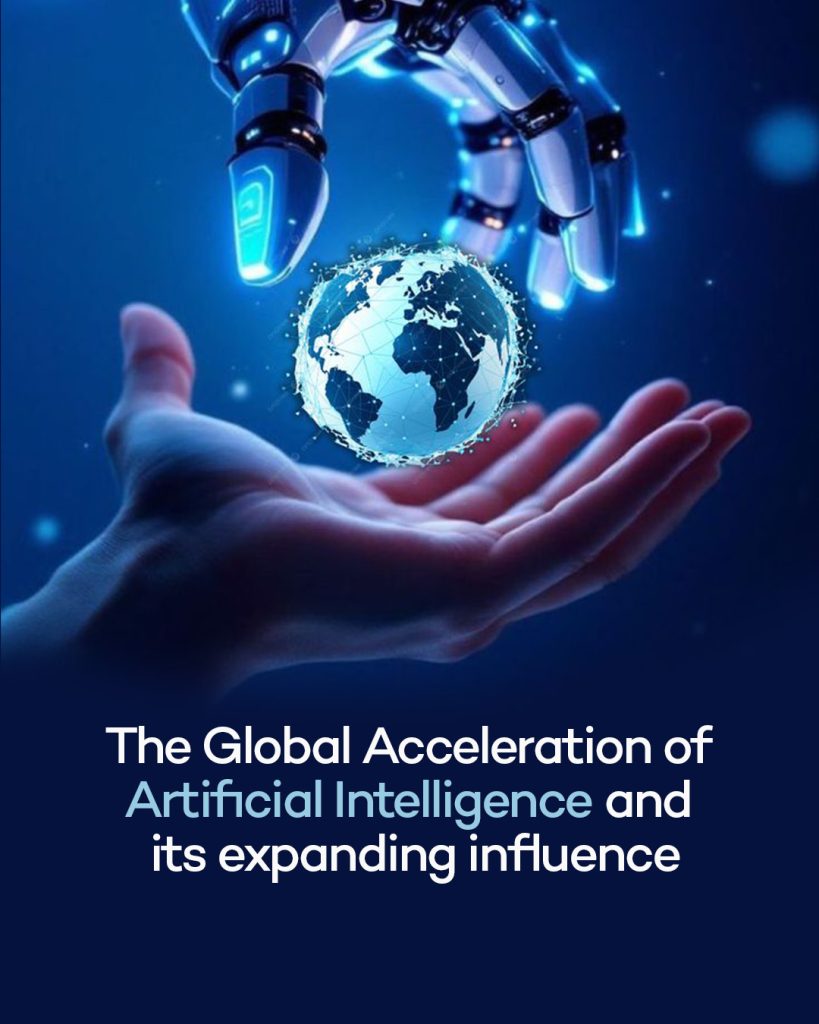
Artificial Intelligence continues to dominate global tech discussions this week, but what is changing now is not just its presence, but its depth of integration into nearly every layer of digital and physical systems. AI is no longer being treated as an emerging innovation; it is increasingly functioning as foundational infrastructure, similar to electricity or the internet, shaping how industries operate, how governments plan, and how individuals interact with technology on a daily basis. Major technology corporations such as Microsoft, Google, Amazon, and Meta are investing heavily in expanding their AI ecosystems, not just by improving software models but by building entire infrastructures around artificial intelligence, including specialized chips, high-performance computing systems, and massive data centers designed specifically for machine learning workloads. This shift reflects a deeper reality that AI is becoming the central operating layer of modern digital systems, influencing everything from search engines and social media algorithms to cloud computing, logistics, healthcare diagnostics, and financial forecasting.
The scale of investment being poured into AI development is unprecedented, and it is creating a technological race among global companies to achieve dominance in computational power, data access, and model efficiency. The competition is no longer simply about who can build the smartest AI model, but about who can build the most scalable, reliable, and widely integrated AI ecosystem that can be deployed across industries and geographies. This has led to rapid expansion in AI infrastructure, with companies prioritizing long-term positioning over short-term profitability, betting that whoever controls AI infrastructure will have significant influence over the future of global digital economies. At the same time, this rapid expansion is reshaping the global workforce in complex ways. While AI is creating new categories of employment such as machine learning engineering, AI ethics auditing, prompt design, and systems optimization, it is also automating many traditional roles that involve repetitive, predictable, or data-heavy tasks. This dual effect is creating a transitional labor market where demand for highly skilled AI-related roles is increasing while many conventional roles are shrinking or being redefined, leading to a significant gap between technological advancement and workforce adaptation.
Beyond employment, there is also a growing discussion about dependency and control, as more organizations rely on AI systems to make decisions that were previously handled by humans. This raises concerns about transparency, accountability, and bias, especially as AI systems are increasingly used in sensitive areas such as hiring, loan approvals, healthcare recommendations, and law enforcement analysis. The question is no longer whether AI will be adopted, but how much control humans will retain over systems that are becoming increasingly autonomous in decision-making. As a result, AI is evolving into both an opportunity and a structural challenge, reshaping not only industries but also the ethical and governance frameworks that support them.
Posted inAI
The Global Acceleration of Artificial Intelligence and Its Expanding Influence
Posted by
 No Comments
No Comments
Post navigation
Next Post
What 6G Could Actually Change