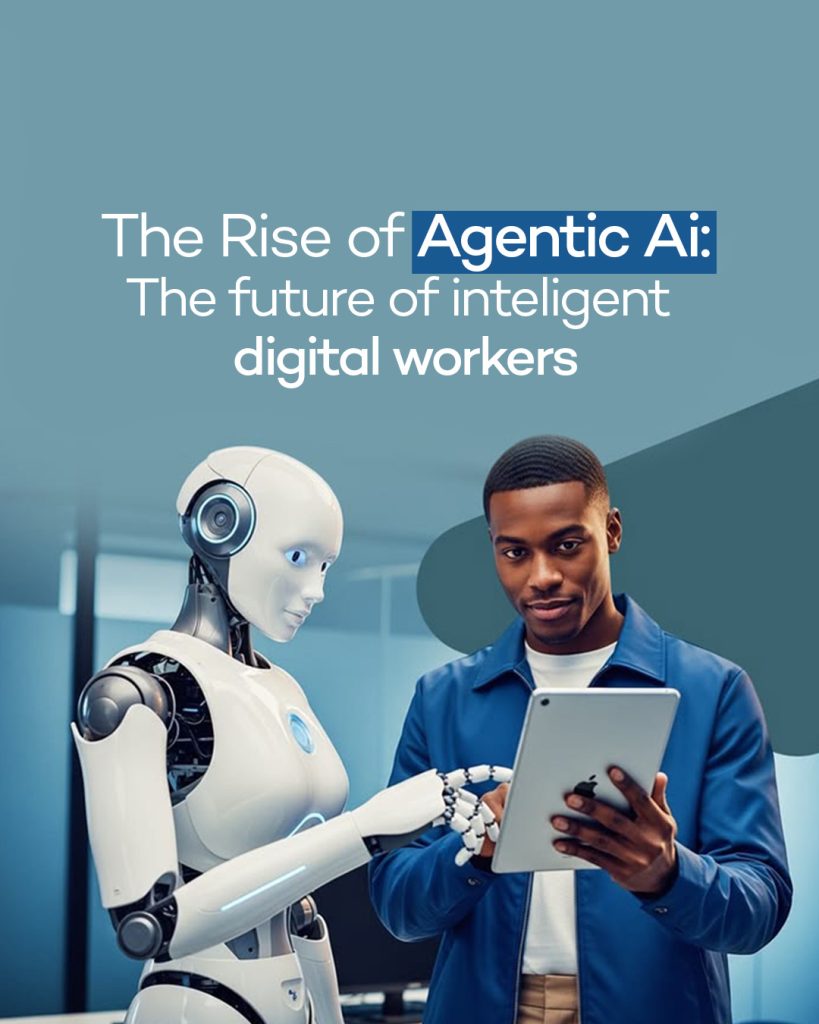

Artificial Intelligence has continued to evolve rapidly over the past few years, but one of the most important developments currently dominating the technology industry is the rise of Agentic AI. Unlike traditional AI systems that only respond to commands, Agentic AI refers to systems that can think through tasks, make decisions, plan actions, and execute operations with minimal human supervision. This new level of intelligence is changing how businesses, industries, and individuals interact with technology.
Many technology companies are now investing heavily in Agentic AI because it represents the next stage of automation.
Traditional chatbots and AI assistants mainly answer questions or generate content when prompted by users. Agentic AI goes beyond this by acting more like a digital employee capable of handling multiple responsibilities independently. These systems can analyze situations, gather information, make decisions, and complete complex workflows from start to finish.
For example, in customer service, an AI agent can receive a customer complaint, analyze the issue, search company records, generate a solution, and send a response without requiring constant human guidance. In software development, AI agents can now write code, test applications, identify errors, and recommend improvements. This is helping companies reduce workloads and improve efficiency at unprecedented levels.
One major reason why Agentic AI is trending globally is because businesses are beginning to restructure their operations around AI-powered workflows. Companies no longer see AI as just a support tool; they now view it as a collaborative digital workforce. Industries such as healthcare, finance, education, cybersecurity, marketing, and logistics are already implementing AI agents to improve productivity and reduce operational costs.
In healthcare, AI agents are being developed to monitor patient conditions, assist doctors with diagnosis, and analyze medical records faster than traditional systems. In finance, they help detect fraud, analyze market risks, and automate financial processes. Educational platforms are also using intelligent AI tutors that personalize learning experiences based on students’ strengths and weaknesses.
Another major discussion surrounding Agentic AI is cybersecurity. Security experts are observing how both organizations and cybercriminals are using AI-powered automation. Companies now use AI to detect cyber threats faster, while hackers are also leveraging AI to automate phishing attacks and malware development. This has created an entirely new cybersecurity landscape where AI systems are competing against other AI systems.
Despite its advantages, Agentic AI also raises serious ethical concerns. Experts are questioning how much control autonomous systems should have and who becomes responsible when AI systems make harmful decisions. There are growing discussions about privacy, misinformation, job displacement, and the need for stronger AI regulations. Governments and technology organizations worldwide are now working on policies to ensure responsible AI development.
The rise of Agentic AI is not simply another technological improvement; it represents a major transformation in the relationship between humans and machines. Over the next decade, AI agents may become deeply integrated into workplaces, businesses, and everyday life. Many analysts believe this shift could redefine global productivity and become one of the most influential technological revolutions since the creation of the internet.