Technology is evolving faster than ever, and the programming languages developers choose today will shape the tech industry of tomorrow.
Whether you’re a beginner stepping into the world of coding or an experienced developer looking to upgrade your skills, learning the right language can significantly boost your career opportunities.
Here are the top 10 programming languages expected to dominate in 2026.
1. PYTHON
Python continues to dominate the programming world thanks to its simplicity and versatility. It is widely used in AI, machine learning, data science, web development, and automation.
With powerful frameworks such as TensorFlow, PyTorch, and Django, Python remains the top choice for developers working with modern technologies.
Why learn Python in 2026?
Easy for beginners
Massive community support
Essential for AI and data science
2. JAVASCRIPT
JavaScript remains the backbone of modern web development. It powers interactive websites and applications across the internet.
Front-end frameworks like React, Angular, and Vue.js rely heavily on JavaScript, while Node.js allows developers to build backend services using the same language.
Why learn JavaScript?
Essential for web development
Enables full-stack development
Huge ecosystem of libraries and frameworks
3. JAVA
Java has been a cornerstone of enterprise software for decades. Its stability, security, and platform independence make it ideal for large-scale applications, financial systems, and Android development.
Many global companies still rely heavily on Java-based systems.
Why learn Java?
High demand in enterprise environments
Strong job stability
Large developer community
4. C#
C# is a powerful programming language developed by Microsoft. It’s widely used for Windows applications, enterprise software, and game development using Unity.
With the continued growth of the gaming industry, C# remains highly relevant.
Why learn C#?
Essential for Unity game development
Strong support from Microsoft
Used in enterprise systems
5. GO(GOLAND)
Created by Google, Go is designed for speed, simplicity, and scalability. It is widely used in cloud computing, distributed systems, and microservices architecture.
Companies like Google, Uber, and Dropbox rely on Go for high-performance backend services.
Why learn Go?
Excellent for cloud infrastructure
Simple yet powerful
Highly scalable
6. RUST
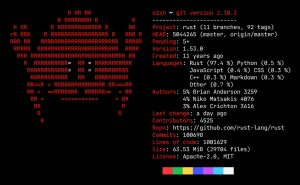
Rust has gained massive popularity for its focus on memory safety and performance. It is often used in system-level programming, game engines, and high-performance applications.
Rust is also becoming popular for building secure software.
Why learn Rust?
Extremely fast and efficient
Prevents memory-related bugs
Loved by developers worldwide
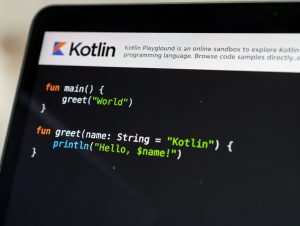
7. Kotlin
Kotlin has become the official language for Android development, gradually replacing Java for many mobile applications.
Its modern syntax and seamless integration with Java make it attractive for mobile developers.
Why learn Kotlin?
Officially supported by Google for Android
Cleaner and safer than Java
Growing adoption among developers
8. TYPESCRIPT
TypeScript is a strongly typed version of JavaScript that helps developers build large and scalable applications.
Many modern frameworks and companies prefer TypeScript because it reduces errors and improves maintainability.
Why learn TypeScript?
Improves JavaScript development
Ideal for large-scale applications
Growing industry demand
9. SWIFT
Swift is Apple’s main programming language for iOS, macOS, watchOS, and tvOS applications.
As the Apple ecosystem continues to grow, Swift developers remain in high demand.
Why learn Swift?
Essential for iOS development
Fast and modern syntax
Strong Apple ecosystem
10. SQL and NoSQL
Modern applications rely heavily on data management, making database languages extremely important.
SQL is used for relational databases like MySQL and PostgreSQL, while NoSQL databases like MongoDB and Firebase handle large-scale, flexible data structures.
Why learn SQL/NoSQL?
Critical for backend development
Essential for data-driven applications
High demand across industries
The programming landscape in 2026 will reward developers who stay adaptable and continuously learn new technologies. While languages like Python and JavaScript remain essential, emerging languages such as Rust, Go, and Kotlin are shaping the future of modern software development.
Choosing the right language ultimately depends on your career goals—whether it’s web development, mobile apps, AI, cloud computing, or system programming.
One thing is certain: the developers who keep learning will always stay ahead in the tech industry.





 New Horizons Nigeria Blog

 No Comments